
Peru
Peru – Manu National Park and Manu Wildlife Center (7 days)
Peru – Manu National Park and Manu Wildlife Center (7 days)
Duration
7 days
Start/End
Cusco/Puerto Maldonado
Tour type
Individual · Group
Level
Moderate
Overview
Overland you cross an extraordinary variety of habitats – from the barren puna via elfin and cloud forests to the tropical lowlands. By boat you travel the rivers into Manu National Park to the lakes Cocha Salvador and Cocha Otorongo and to the Manu Wildlife Center with its parrot and tapir clay licks.
This is one of the most fascinating nature journeys in the world. Overland and by river, you cross an extraordinary range of life zones in just a few days: from high Andean valleys and the stark puna through elfin forest and lush cloud forest down to the lowland rainforest of the Amazon basin. After a night at the Cock-of-the-Rock Lodge, motorized canoes take you along the Alto Madre de Dios and up the Manu River deep into Manu National Park, the greatest national park of the upper Amazon. On the oxbow lakes Cocha Salvador and Cocha Otorongo, you look for giant otters, caimans, monkeys and countless birds. The journey ends at the Manu Wildlife Center with its macaw clay lick, a canopy tower and one of the best places in the Amazon to see tapirs. From Puerto Maldonado, you fly back to Cusco or Lima. We travel in small groups with experienced naturalist guides.
Tour Code
Maximum altitude
Itinerary
Day 1
Cusco – Paucartambo – Ajanaco – Cock-of-the-Rock Lodge
Cock-of-the-Rock Lodge (1,600 m / 5,249 ft)
Scenic drive of approx. 7–8 h with stops · max. 3,900 m / 12,795 ft
We leave Cusco (3,400 m / 11,155 ft) early in the morning and head for the cloud forest, where the Andes fall away to the Amazon basin. On the way, we visit a high mountain wetland with migrant and local waterfowl and cross two mountain ranges between the Cusco and Paucartambo valleys, reaching a maximum altitude of 3,900 m / 12,795 ft. We stop at mountain villages and at the pre-Inca burial towers (chullpas) of Ninamarca. At the Ajanaco pass, the entrance to Manu National Park, the Andes begin their plunge into the Amazon basin – in clear weather, the view over the cloud forest down to the lowland rainforest is breathtaking. After lunch, we descend through elfin forest into a magical world of giant ferns, orchids, bromeliads and begonias. With frequent stops, we may spot quetzals, trogons or guans before reaching the Cock-of-the-Rock Lodge in the afternoon.
Cusco – Paucartambo – Ajanaco – Cock-of-the-Rock Lodge
Day 1
Cock-of-the-Rock Lodge (1,600 m / 5,249 ft)
Scenic drive of approx. 7–8 h with stops · max. 3,900 m / 12,795 ft
We leave Cusco (3,400 m / 11,155 ft) early in the morning and head for the cloud forest, where the Andes fall away to the Amazon basin. On the way, we visit a high mountain wetland with migrant and local waterfowl and cross two mountain ranges between the Cusco and Paucartambo valleys, reaching a maximum altitude of 3,900 m / 12,795 ft. We stop at mountain villages and at the pre-Inca burial towers (chullpas) of Ninamarca. At the Ajanaco pass, the entrance to Manu National Park, the Andes begin their plunge into the Amazon basin – in clear weather, the view over the cloud forest down to the lowland rainforest is breathtaking. After lunch, we descend through elfin forest into a magical world of giant ferns, orchids, bromeliads and begonias. With frequent stops, we may spot quetzals, trogons or guans before reaching the Cock-of-the-Rock Lodge in the afternoon.
Day 2
Cock-of-the-Rock Lodge – Atalaya – Romero Lodge
Romero Lodge (Manu National Park)
Drive and boat trip on the Alto Madre de Dios and Manu rivers
Early in the morning, we look for birds and perhaps woolly or brown capuchin monkeys near the lodge. After breakfast, we drive on as the mountains give way to low hills and farmland, and visit a coca plantation in Patria that grows leaves legally for the Peruvian market. At midday, we reach the tiny port of Atalaya, where the lowland part of our journey begins: from now on, we travel in large, roofed motorized canoes. Along the Alto Madre de Dios, we see terns, cormorants, white-winged swallows and flocks of nighthawks. We then turn north up the chocolate-brown Manu River into the national park, register at the Limonal ranger station and continue to Romero Lodge, where the sounds of the rainforest accompany us into the night.
Cock-of-the-Rock Lodge – Atalaya – Romero Lodge
Day 2
Romero Lodge (Manu National Park)
Drive and boat trip on the Alto Madre de Dios and Manu rivers
Early in the morning, we look for birds and perhaps woolly or brown capuchin monkeys near the lodge. After breakfast, we drive on as the mountains give way to low hills and farmland, and visit a coca plantation in Patria that grows leaves legally for the Peruvian market. At midday, we reach the tiny port of Atalaya, where the lowland part of our journey begins: from now on, we travel in large, roofed motorized canoes. Along the Alto Madre de Dios, we see terns, cormorants, white-winged swallows and flocks of nighthawks. We then turn north up the chocolate-brown Manu River into the national park, register at the Limonal ranger station and continue to Romero Lodge, where the sounds of the rainforest accompany us into the night.
Day 3
Romero Lodge – Casa Matsiguenka
Casa Matsiguenka (Manu National Park)
Boat trip of approx. 4 h on the Manu River and short walk
In the morning, we continue up the Manu River. Orinoco geese and horned screamers stroll on the beaches, herons patrol the shore and sunbathing turtles slide off their logs as we pass. After about four hours, we reach Casa Matsiguenka, a simple, comfortable lodge run by the indigenous Matsiguenka communities of Tayakome and Yomibato. Time permitting, we take a short walk before dinner – our first encounter with the virgin rainforest.
Romero Lodge – Casa Matsiguenka
Day 3
Casa Matsiguenka (Manu National Park)
Boat trip of approx. 4 h on the Manu River and short walk
In the morning, we continue up the Manu River. Orinoco geese and horned screamers stroll on the beaches, herons patrol the shore and sunbathing turtles slide off their logs as we pass. After about four hours, we reach Casa Matsiguenka, a simple, comfortable lodge run by the indigenous Matsiguenka communities of Tayakome and Yomibato. Time permitting, we take a short walk before dinner – our first encounter with the virgin rainforest.
Day 4
Cocha Salvador and Cocha Otorongo
Casa Matsiguenka (Manu National Park)
Catamaran trip on the lake, observation tower and rainforest walks
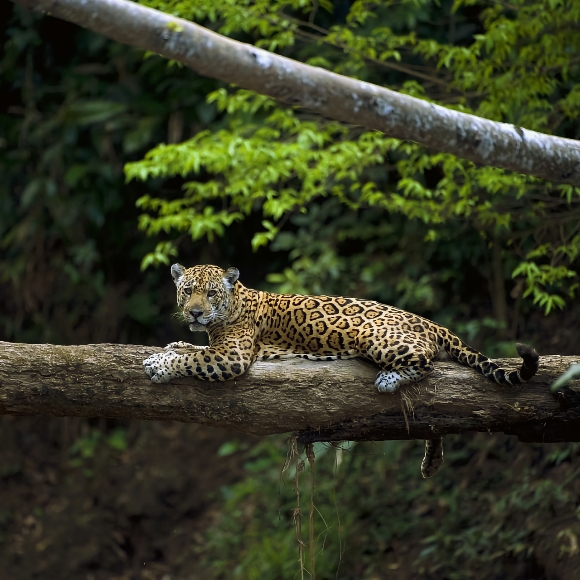
Today we visit two oxbow lakes, formed when the river changed its course. The park authorities set the time of our visit to Cocha Salvador; depending on this, we visit Cocha Otorongo earlier or later in the day. On the way, we may spot capybaras on the riverbank or, with great luck, a jaguar. At Cocha Otorongo, a dock and a 15 m (50 ft) observation tower let us scan the shores for monkeys, kingfishers, hoatzins, anhingas and the resident family of giant otters. Cocha Salvador, the largest lake of the area at 3.5 km (2.2 mi), is explored on a floating catamaran: monkeys in the trees, macaws overhead, herons and egrets on the shore, caimans in the shallows – and, with luck, the shy giant otters fishing and playing together.
Cocha Salvador and Cocha Otorongo
Day 4
Casa Matsiguenka (Manu National Park)
Catamaran trip on the lake, observation tower and rainforest walks
Today we visit two oxbow lakes, formed when the river changed its course. The park authorities set the time of our visit to Cocha Salvador; depending on this, we visit Cocha Otorongo earlier or later in the day. On the way, we may spot capybaras on the riverbank or, with great luck, a jaguar. At Cocha Otorongo, a dock and a 15 m (50 ft) observation tower let us scan the shores for monkeys, kingfishers, hoatzins, anhingas and the resident family of giant otters. Cocha Salvador, the largest lake of the area at 3.5 km (2.2 mi), is explored on a floating catamaran: monkeys in the trees, macaws overhead, herons and egrets on the shore, caimans in the shallows – and, with luck, the shy giant otters fishing and playing together.
Day 5
Casa Matsiguenka – Manu Wildlife Center
Manu Wildlife Center
Boat trip downriver, rainforest trails and observation tower
We set off downriver at dawn, when the chances of wildlife encounters are best, and leave the park at the Limonal ranger station. Past the village of Boca Manu, we continue for another ninety minutes downstream and reach the Manu Wildlife Center in time for lunch. In the afternoon, our guide leads us on the lodge's trails in search of monkeys and many species of birds, and those with energy can climb the canopy observation tower. In the evening, if the river level allows, we go out by boat to look for caimans and other nocturnal animals.
Casa Matsiguenka – Manu Wildlife Center
Day 5
Manu Wildlife Center
Boat trip downriver, rainforest trails and observation tower
We set off downriver at dawn, when the chances of wildlife encounters are best, and leave the park at the Limonal ranger station. Past the village of Boca Manu, we continue for another ninety minutes downstream and reach the Manu Wildlife Center in time for lunch. In the afternoon, our guide leads us on the lodge's trails in search of monkeys and many species of birds, and those with energy can climb the canopy observation tower. In the evening, if the river level allows, we go out by boat to look for caimans and other nocturnal animals.
Day 6
Manu Wildlife Center: macaw clay lick and tapir clay lick
Manu Wildlife Center
Clay lick, rainforest trails and night watch at the tapir lick
After an early start and a short boat ride, a 20-minute trail leads to the Blanquillo macaw clay lick. From a comfortable hide, we enjoy breakfast while red-and-green macaws and blue-headed, mealy, yellow-crowned and orange-cheeked parrots gather in the treetops and finally descend in a colorful, noisy spectacle to eat the clay. The lick is most active from August to October and less so in May and June. After lunch, we explore the trails and then walk to the famous tapir clay lick, the most active known in the Amazon. From a raised, padded platform with mattresses and mosquito nets, we wait – sometimes for hours – for the tapirs, the largest land animals of South America, to come out of the forest to eat clay just 10–20 m (33–66 ft) away. Flash photography is allowed.
Manu Wildlife Center: macaw clay lick and tapir clay lick
Day 6
Manu Wildlife Center
Clay lick, rainforest trails and night watch at the tapir lick
After an early start and a short boat ride, a 20-minute trail leads to the Blanquillo macaw clay lick. From a comfortable hide, we enjoy breakfast while red-and-green macaws and blue-headed, mealy, yellow-crowned and orange-cheeked parrots gather in the treetops and finally descend in a colorful, noisy spectacle to eat the clay. The lick is most active from August to October and less so in May and June. After lunch, we explore the trails and then walk to the famous tapir clay lick, the most active known in the Amazon. From a raised, padded platform with mattresses and mosquito nets, we wait – sometimes for hours – for the tapirs, the largest land animals of South America, to come out of the forest to eat clay just 10–20 m (33–66 ft) away. Flash photography is allowed.
Day 7
Manu Wildlife Center – Colorado – Puerto Maldonado
Boat trip of approx. 2.5 h and drive of approx. 3.5 h
We leave the lodge very early for a boat trip of about two and a half hours downstream to the gold-mining town of Colorado; breakfast is served at the lodge or on the boat. On the way, we see lowland settlements and gold miners along the Madre de Dios River. From Colorado, we drive about 45 minutes to Puerto Carlos, cross the Inambari River by boat to Santa Rosa and continue by van for about two and a half hours to the airport of Puerto Maldonado, from where you fly to Cusco or Lima.
Manu Wildlife Center – Colorado – Puerto Maldonado
Day 7
Boat trip of approx. 2.5 h and drive of approx. 3.5 h
We leave the lodge very early for a boat trip of about two and a half hours downstream to the gold-mining town of Colorado; breakfast is served at the lodge or on the boat. On the way, we see lowland settlements and gold miners along the Madre de Dios River. From Colorado, we drive about 45 minutes to Puerto Carlos, cross the Inambari River by boat to Santa Rosa and continue by van for about two and a half hours to the airport of Puerto Maldonado, from where you fly to Cusco or Lima.
Price from
€2,870.00
Services
What's included
Pre-Tour Briefing: Briefing at your hotel in Cusco two days before departure.
Naturalist Guide: Local bilingual guide (English and Spanish) with in-depth knowledge of the flora and fauna and of the birds of Manu.
Transportation: Private transport (minivan) from your hotel in Cusco, motorized canoes on the rivers and land transfer to the airport of Puerto Maldonado.
Accommodation: 6 nights in rainforest lodges (Cock-of-the-Rock Lodge, Romero Lodge, Casa Matsiguenka, Manu Wildlife Center).
Meals: All meals from the box lunch on Day 1 to the breakfast on Day 7; vegetarian options and special diets on request.
Entrance Fees: Manu National Park and the visited reserves.
What's not included
Flight: Flight from Puerto Maldonado to Cusco or Lima and airport taxes.
Meals: Breakfast on Day 1.
Travel Insurance: Comprehensive travel insurance is strongly recommended.
Drinks & Personal Expenses: Drinks outside the main meals and souvenirs.
Tips: Gratuities for guide, driver and lodge staff (optional).
Character of the trip
Fitness
Moderate
Altitude
Gentle (up to 3,900 m)
Culture / nature
Balanced
Fitness – moderate: Long days of travel by road and boat, walks on rainforest trails and early starts. A basic level of fitness and a sense of adventure are required.
Altitude – moderate: The road crosses the Andes at up to 3,900 m / 12,795 ft; after the first night, the route continues in the lowland rainforest at around 300 m / 984 ft.
Culture & nature – nature-focused: Cloud forest, pristine lowland rainforest, giant otters, macaws, tapirs, monkeys, caimans and a visit to the Matsiguenka community lodge.
Lodges: Six nights in simple but comfortable rainforest lodges; electricity is limited in most of them.
Dates and prices
Individual dates
Optional
Cusco City Tour (half day)
Public tour – available as a private tour on request.
€20.00
per person
Sacred Valley Tour (full day)
Public tour – available as a private tour on request.
€25.00
per person
Groups of 6 or more: contact info@silvertip.at for special rates and tailor-made options.
Notes on the trip
Good to know
Program: The itinerary may vary slightly to maximize wildlife sightings, depending on the latest reports of the guides and researchers at the lodges.
Climate: The Manu lowlands receive 2,500–3,500 mm (98–138 in) of rain per year; the average temperature is 28 °C (82 °F), with highs of 34 °C (93 °F) and lows of 22 °C (72 °F). In the dry season, cold fronts (friajes) can bring temperatures down to 15 °C (59 °F). The rainy season lasts from November to April.
Electricity: Most lodges have limited electricity from a 220 V generator at certain times; a plug adapter may be required.
Flight: Please book your flight from Puerto Maldonado for the afternoon of Day 7 – we are happy to help.
Small groups: Departures with 4 to 12 people; private tours on request.
What to bring
Daypack & Binoculars: A small backpack for the day and good binoculars.
Original Passport: Mandatory.
Clothing: Lightweight long trousers and long-sleeved shirts, T-shirts, a warm layer for the mornings and the drive over the Andes, a hat and rain gear (jacket or poncho).
Footwear: Hiking boots or sturdy shoes and sandals.
Protection: Insect repellent (20% DEET for the forest), sunscreen and sunglasses.
Other: Headlamp with spare batteries, water bottle, personal first-aid kit and medication, camera, some Peruvian soles; pack your things in plastic bags to protect them from moisture.